
Széchenyi Thermal Bath
- Thermal Bath
- Price: 12 000 Ft - 18 000 Ft
- Opening hours: 06:00 - 22:00 daily
History
The bath's story starts with an accident. In 1868, city engineers began drilling a well in what is now City Park, hoping to find fresh drinking water for Pest. Ten years and 970 metres later, in 1878, they struck not drinking water but an artesian spring gushing out at 74.5°C — engineer Vilmos Zsigmondy, who oversaw the project, had found a thermal source instead of the one he'd been sent to find. A modest bathing pavilion, known simply as the Artesian Bath, opened on the site to make use of the discovery, decades before the palace that stands there now.
That palace came later: construction began in 1909 to a design by architect Győző Czigler, and the neo-baroque complex opened in June 1913 under the name it still carries, Széchenyi, after the reformist Count István Széchenyi, still remembered in Hungary as 'the Greatest Hungarian.' The original well ran dry by 1938, by which point a second, far deeper well — drilled to 1 256 metres between 1936 and 1938 — had already replaced it, and still supplies the baths with roughly 6 000 cubic metres of 77°C water a day.
Europe's largest bathing complex
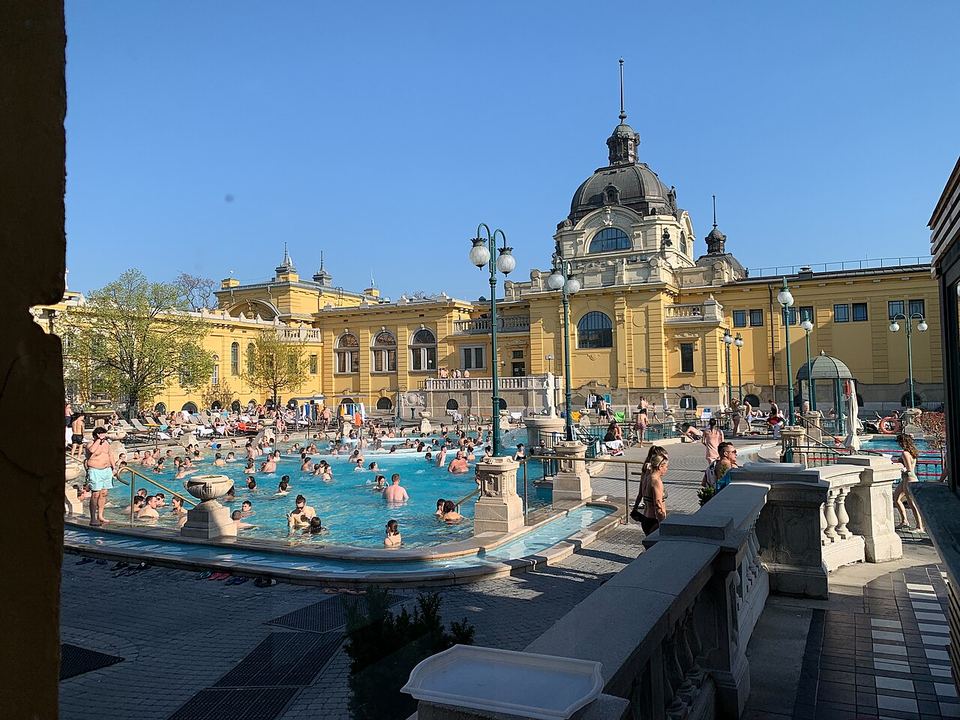
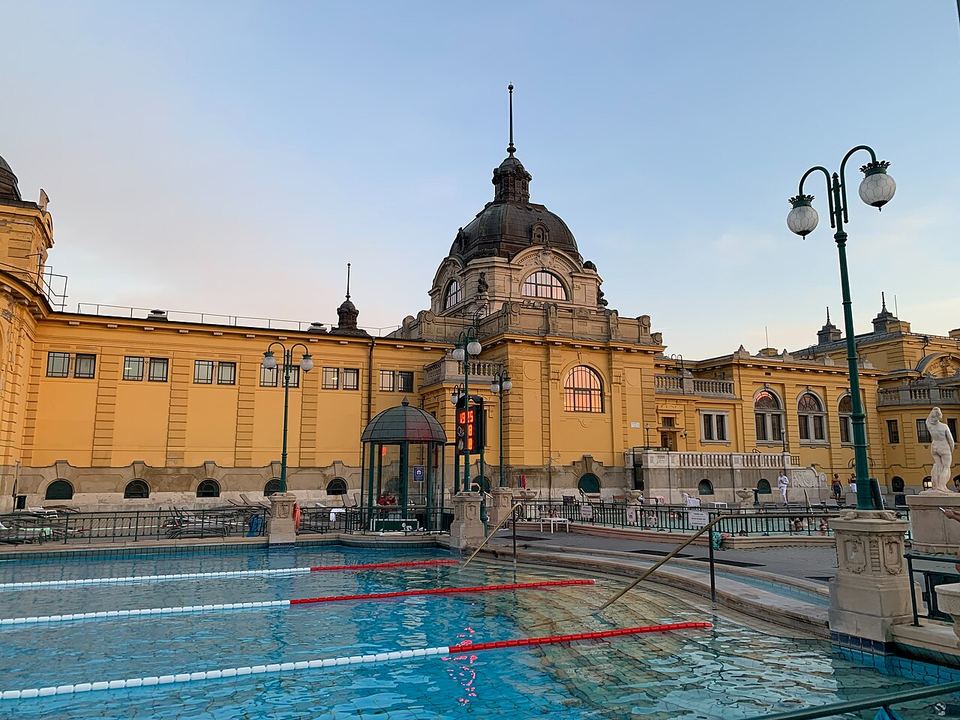
What opened in 1913 as a single bathing pavilion has grown into the largest medicinal bathing complex in Europe: eighteen pools in total, three of them outdoors and heated year-round, the other fifteen tucked into a maze of tiled indoor halls together with saunas and steam cabins. The mustard-yellow neo-baroque facade, ringed by colonnades and capped with a triple dome, wraps around the whole site and remains one of the most recognisable buildings in Budapest.
Some of that scale is a direct legacy of the bath's origin as a well-house rather than a designed spa: because the site kept expanding around a working thermal source instead of being built to one fixed plan, it grew outward and upward in stages across the 20th century, adding pools, a drinking-cure hall dispensing the medicinal water for internal use, and separate wings that for decades kept men's and women's bathing apart, before the complex was consolidated into today's mostly mixed layout.
Did you know?
The three outdoor pools hold their heat, up to about 38°C, through the coldest Budapest winters, and it's in January and February that the bath produces its most photographed scene: clouds of steam rising off the water while bathers play chess on small floating boards, seemingly unbothered by the snow around them.
On selected Saturday nights, Széchenyi turns into something closer to a nightclub: the 'Sparty' events fill the same outdoor pools with DJs, coloured lighting rigs and cocktail bars, swapping the daytime's chess boards for a very different crowd until the early hours.
Good to know
Széchenyi is open every day from 6am to 10pm, with ticket prices generally running from about 12 000 to 18 000 forints depending on the type of cabin or locker booked; buying online in advance is worth it in high season, when queues at the door can be long. Towels, swimsuits and robes can all be rented on site for anyone travelling light.
Early morning or the last hour before closing tend to be the quietest times to visit, and winter mornings — cold air, hot water, rising steam — are widely considered the most atmospheric. Sparty nights are ticketed separately from regular daytime entry and skew toward a younger crowd, so check the calendar first if a quieter soak is what you're after.