
Discover Budapest
- About 1.7 million residents in the city proper (nearly 3 million in the wider metropolitan area)
- Central Hungary (Budapest is its own capital-city county)
- CET/CEST (UTC+1 / UTC+2)
History
Long before it was Budapest, the hills above the Danube’s right bank were home to a Celtic tribe, the Eravisci, whose settlement the Romans absorbed and rebuilt as Aquincum around the 1st century AD, eventually making it capital of the province of Pannonia Inferior. Ruins of its amphitheatre, baths and civilian town still surface in the northern Óbuda district today, evidence of a Roman garrison city that already prized the same thermal springs modern Budapest bathes in. Roman control collapsed under waves of Germanic and Hunnic incursions in the 5th century, and the region passed through several hands before the Magyar tribes, led by Grand Prince Árpád, crossed the Carpathians and settled the basin around 895-896, an event Hungary still marks as its founding.
The Mongol invasion of 1241 devastated the loosely fortified settlements on both banks of the river, killing a huge share of the population in a single catastrophic year. King Béla IV drew the harshest lesson from the disaster: stone fortifications, not wooden palisades, were the only real defence, and he ordered the first royal castle built on Castle Hill, the seed of what became Buda Castle. Buda flourished as a royal seat through the following centuries, reaching a cultural peak under King Matthias Corvinus in the late 15th century, whose court imported Italian Renaissance scholars, artists and one of Europe’s finest libraries, briefly making Buda a rival to Florence as a centre of humanist learning.
That golden age ended abruptly in 1526, when Hungary’s army was crushed by Ottoman forces at the Battle of Mohács, and by 1541 Buda itself had fallen, beginning nearly a century and a half of Ottoman occupation. The Ottomans built or expanded several of the thermal baths that still operate today, including the predecessor of Rudas, recognising and formalising a bathing culture the Romans had started and Budapest still prizes above almost any other Central European capital. Buda was retaken only in 1686, after a brutal siege by a Habsburg-led coalition army that left much of the city in ruins, folding Hungary into the Habsburg monarchy for the following centuries.
Buda, Óbuda and Pest remained three administratively separate towns, joined by not much more than ferries and, from 1849, the new Chain Bridge, until they were formally merged into a single city called Budapest in 1873. Unification triggered an extraordinary building boom: the Hungarian Parliament, Andrássy Avenue, the Opera House, the Great Market Hall and continental Europe’s first underground railway all rose within a few decades, culminating in the lavish millennial celebrations of 1896 that marked a thousand years since the Magyar settlement and turned Budapest into one of Europe’s grandest capitals almost overnight.
The 20th century was far less kind. Hungary’s defeat alongside the Central Powers in the First World War cost it roughly two-thirds of its historic territory under the 1920 Treaty of Trianon, a loss still felt in Hungarian political memory today. The Second World War brought catastrophe directly to the capital: the fascist Arrow Cross regime deported and murdered tens of thousands of Budapest’s Jews in 1944-45, and the following Battle of Budapest between German and Soviet forces reduced much of the city, including every bridge across the Danube, to rubble. Decades of communist rule followed, briefly interrupted by the crushed 1956 uprising, until the political transition of 1989-90 restored multi-party democracy.
Since joining the European Union in 2004, Budapest has rebuilt itself again, this time as a tourism and nightlife capital: derelict Jewish Quarter courtyards became the ruin bars that define its evenings, restored thermal baths draw bathers by the millions each year, and a wave of design-conscious restaurants and shops has grown up alongside the grand cafés and market halls of the Belle Époque boom. Few European capitals have been rebuilt, reoccupied and reinvented quite so many times, and fewer still wear that history as visibly on their streets.
Did you know?
- Budapest only became a single city in 1873, when Buda, Óbuda and Pest — three separate towns facing each other across the Danube — formally merged.
- More than 100 thermal springs rise beneath the city, one of the highest concentrations anywhere in the world, feeding a bathing culture that runs back through Ottoman and Roman times.
- The M1 metro line, opened in 1896, was continental Europe's first underground railway and still runs in its original shallow tunnels beneath Andrássy Avenue.
- The Rubik's Cube was invented in 1974 by Ernő Rubik, a Budapest architecture professor, originally as a teaching tool for spatial thinking rather than a toy.
- Szimpla Kert, opened in a derelict Jewish Quarter courtyard in 2002, launched the entire 'ruin bar' genre now copied in cities worldwide.
- Hungarian-born scientists nicknamed 'the Martians' — including John von Neumann, Leó Szilárd and Edward Teller — played an outsized role in 20th-century physics, several of them educated in Budapest before emigrating.
Must-see
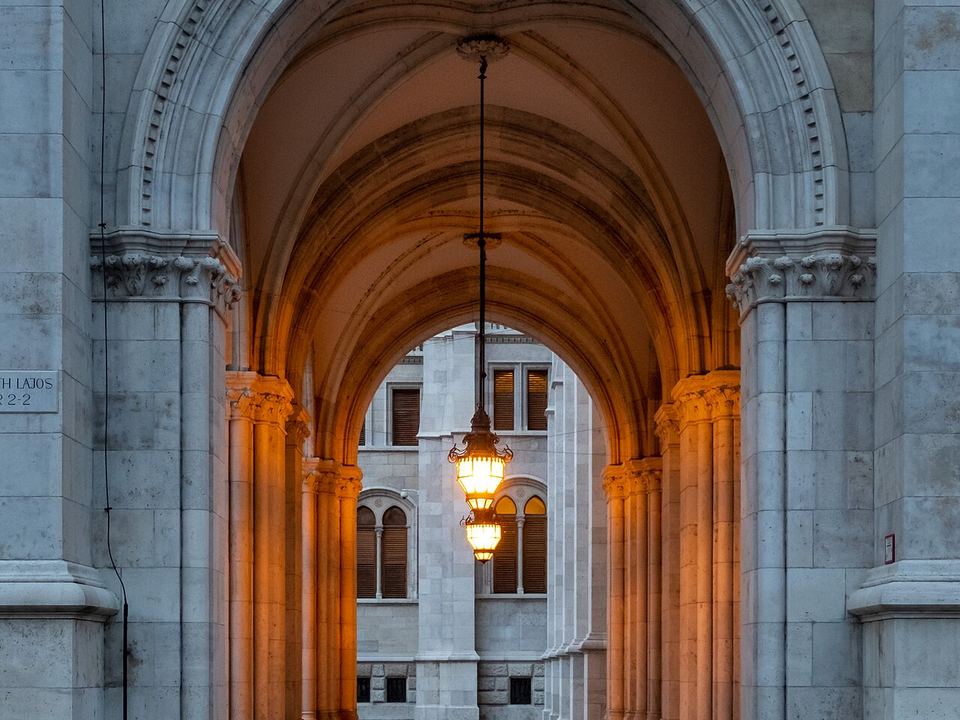
- Hungarian Parliament — Europe's third-largest legislative building, a Gothic Revival riverfront landmark guarding the thousand-year-old Crown of St Stephen beneath its gilded central dome.
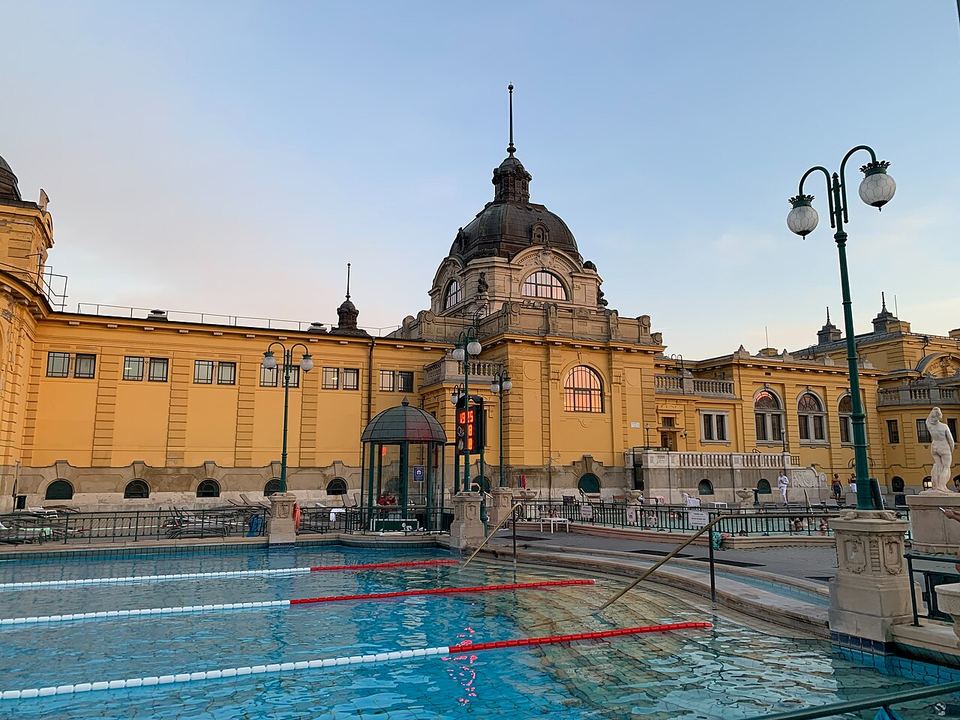
- Széchenyi Thermal Bath — Europe's largest thermal bathing complex, an opulent neo-baroque palace of outdoor and indoor pools fed by hot springs at the edge of City Park.
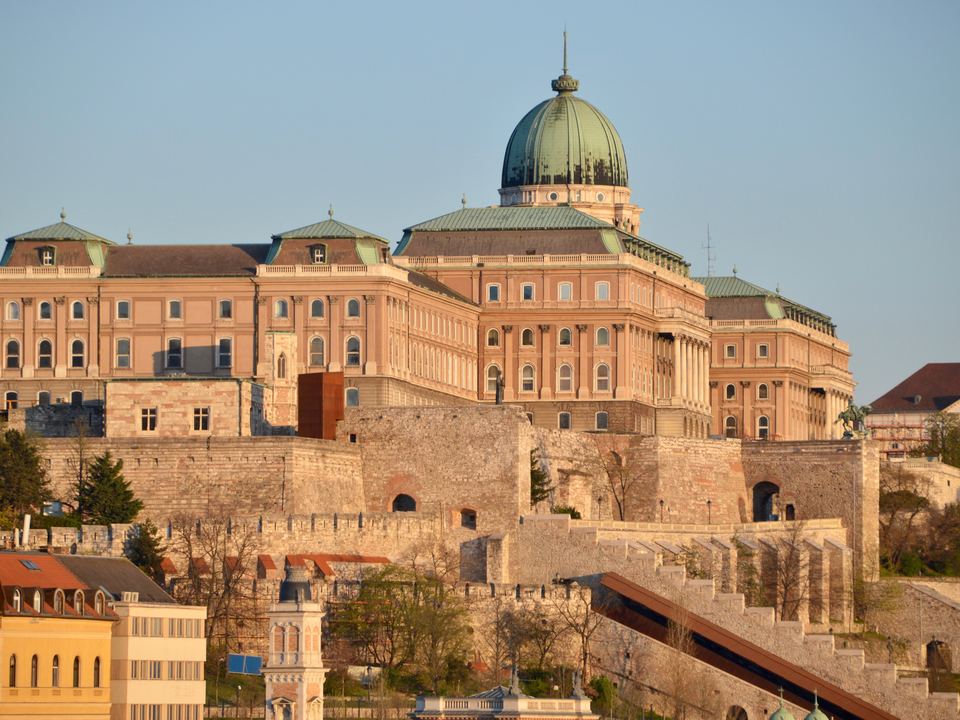
- Buda Castle — The sprawling royal palace crowning Castle Hill, rebuilt after Ottoman siege and wartime ruin, now home to the Hungarian National Gallery and sweeping views over the Danube.
Local dishes
- Goulash (gulyás) — A paprika-spiced beef and vegetable soup, originally a herdsmen's stew from the Hungarian plains and the dish most associated with the country abroad, though rarely as thick as foreign versions suggest.
- Lángos — Deep-fried leavened dough topped with sour cream, grated cheese and garlic, Hungary's definitive street snack, sold at markets and fairs across the country.
- Chimney cake (kürtőskalács) — A cylinder of sweet yeast dough wrapped around a spit, roasted over charcoal and rolled in sugar, cinnamon or nuts, sold hot from street stalls especially around Christmas markets.
- Fisherman's soup (halászlé) — A fiery, paprika-red river-fish soup, traditionally made with carp, that varies distinctly by region but remains a staple of festive tables along the Danube and Tisza.
- Stuffed cabbage (töltött káposzta) — Cabbage leaves rolled around minced pork and rice, slow-cooked with sauerkraut and served with sour cream, a hearty winter classic across Hungarian households.
- Dobos torte — A layered sponge cake alternating chocolate buttercream with a signature hard caramel top, created in 1887 by confectioner József Dobos and still a fixture of Budapest patisseries.
Practical info
Getting around
Budapest's public transport, run by BKK, combines four metro lines (M1 to M4), trams, buses and suburban HÉV trains under a single ticket and travel-card system, with the yellow M1 line running beneath Andrássy Avenue as the oldest on the continent. A single ticket covers one uninterrupted journey, while 24-hour and multi-day travel cards are better value for a typical visit and also cover the funicular up to Castle Hill. Trams are often the most scenic way to see the city, especially tram 2 along the Pest riverbank facing Buda Castle and Parliament. Central Pest is dense and walkable, while crossing to Buda is easiest via the Chain Bridge or Margaret Bridge on foot, or the M2 metro under the river; taxis should be booked through a licensed app such as Bolt or FőTaxi rather than hailed on the street, where unmetered scams targeting tourists are a recurring complaint.
When to go
Spring (April-May) and early autumn (September-October) bring mild, comfortable temperatures and noticeably thinner crowds than summer, making them the best all-round times to visit the city's outdoor sights and baths alike. Summer (June-August) is hot, busy and the peak season for the thermal baths' 'Sparty' pool parties and rooftop bars, but also the most crowded and priciest time for accommodation. Winter is cold but has its own charm, with Christmas markets around Vörösmarty tér and St Stephen's Basilica, ice skating in City Park, and the thermal baths' outdoor pools steaming dramatically in the cold air. Whatever the season, note that Gellért Baths remain closed for renovation until 2028, so plan a soak at Széchenyi or Rudas instead.
Good to know
- Carry small-denomination forint cash for market stalls, small lángos stands and some older cafés that still don't accept cards, even though most restaurants and shops do.
- Tipping around 10% is customary at sit-down restaurants; check the bill first, since a service charge is sometimes already added, particularly at busier tourist-facing venues.
- Book timed-entry tickets for the Hungarian Parliament and Matthias Church online in advance — both cap daily visitor numbers and routinely sell out, especially in summer.
- Only use licensed taxis booked through an app (Bolt, FőTaxi) or ordered by phone; unlicensed cabs hailed on the street near tourist sites are a common source of inflated fares.
- The city's larger museums, including the Hungarian National Museum and Museum of Fine Arts, offer free admission on select national holidays (15 March, 20 August, 23 October) — expect much larger crowds those days.