
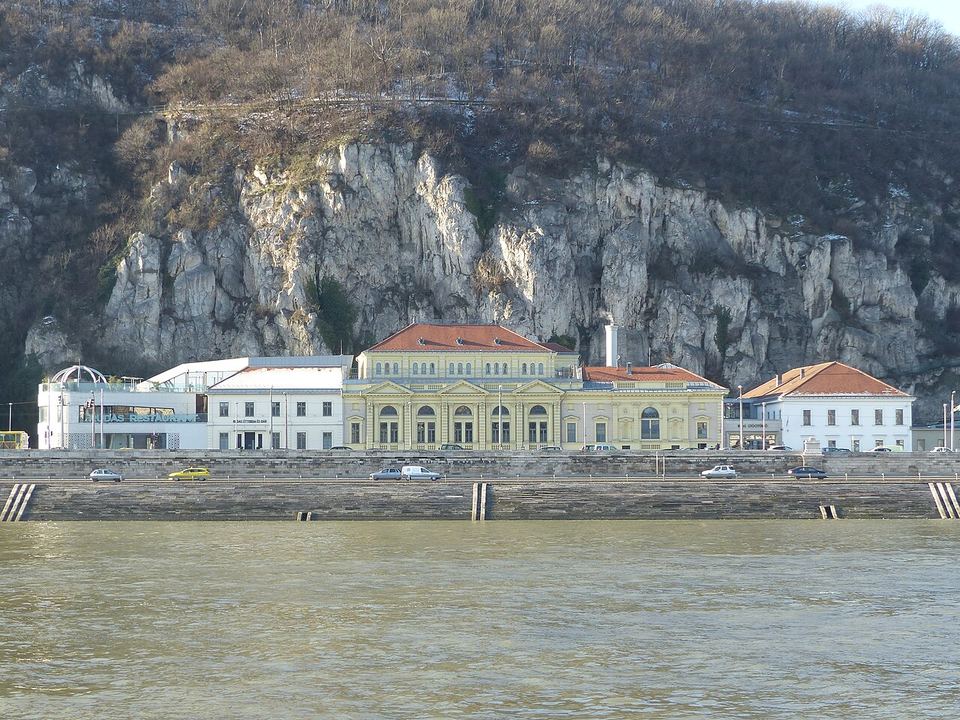
Rudas Baths
- Thermal Bath
- Price: 9 000 Ft - 14 000 Ft
- Opening hours: 06:00 - 20:00 daily (gender-restricted hours vary by day, check schedule)
History
Rudas was built in 1550 on the orders of Sokollu Mustafa, the Ottoman pasha governing Buda, with major rebuilding and expansion carried out over the following two decades — a normal history for an Ottoman bath, since the empire treated hammams as public infrastructure worth continually reinvesting in, not one-off projects. It opened during the roughly 150 years Buda spent under Ottoman rule, a period that left the city with several thermal baths but few as physically intact as this one.
When Buda was retaken from the Ottomans in 1686, most of the city's Turkish-era buildings were damaged or demolished outright; Rudas survived and kept operating as a bathhouse under Habsburg rule with only modest changes for the next two centuries, gaining a swimming pool and sauna in 1896. That continuity is unusual — most of Budapest's other Ottoman baths were rebuilt beyond recognition or lost entirely, which is part of why Rudas is considered the city's most authentic surviving Turkish bath.
The Ottoman-era pool hall
At the centre of Rudas is an octagonal pool sitting directly beneath a ten-metre stone dome, held up by eight pillars that have stood since the 16th century. Small star-shaped and circular openings pierce the dome, and through them shafts of daylight cut across the steam rising off the water, much as they would have for the Ottoman bathers who first used this room nearly 500 years ago. The main pool still runs at its historic temperature of roughly 42-46°C, with four cooler pools set into the corners of the octagon around it.
A 2005-2006 renovation, funded largely through EU redevelopment money, reinforced the structure without replacing it: engineers stabilised the dome and the original pillars and restored the mosaics rather than rebuilding them from scratch, which is why what bathers sit in today is substantially the same physical room, not a modern reconstruction of one.
Did you know?
Rudas carried Ottoman hammam custom more or less unbroken into the 21st century: for most of its history the bath was open to men only, and it took until 2006 for a regular women-only session, now held on Tuesdays, to be introduced. Men-only mornings still run several days a week today, alongside mixed sessions on weekends and some daytime hours, making Rudas the only one of Budapest's major baths that still keeps single-sex hours at all.
The panoramic rooftop pool and wellness terrace, added during that same mid-2000s renovation, sit directly above the centuries-old domed hall below — a glass-walled 21st-century addition balanced on top of a 16th-century one, with views across the Danube to the Gellért and Castle hills that the original Ottoman bathers never had.
Good to know
Rudas is open daily from 6am to 8pm, with entry generally priced between about 9 000 and 14 000 forints. Single-sex scheduling still applies to part of the week — men-only hours run several mornings, women-only on Tuesdays, and mixed sessions cover weekends and other daytime slots — so it's worth checking the current schedule before turning up, since it's adjusted periodically.
Swimsuits and towels can be rented on site, and weekend night bathing, when the dome is lit for a very different atmosphere from its daytime steam, is popular enough to book ahead for. Floors around the historic pool can be warm and slippery underfoot, so bring or rent sandals rather than going barefoot.